Piercing Jewelry Size Guide

The right size helps your jewelry sit comfortably and look the way you want. Piercings and anatomy vary, so use the measurements on each product page and ask us if you’re unsure before ordering.

How to Choose Your Size

How to Choose Your Size

If your piercing is fully healed, compare with a piece that already fits comfortably. Measure the jewelry outside the body when practical; do not remove jewelry from a healing piercing just to measure it.

Compare the listing’s thickness, wearable length or inner diameter, decorative top size and closure type. A familiar-looking design does not guarantee the same fit.

If your piercing is new, healing, irritated or its size is unknown, ask a qualified piercer. A final fit may need an in-person assessment. Never force a thicker post into a piercing or choose a post so short that it presses into the tissue.
Post Thickness and Gauge

Post Thickness and Gauge

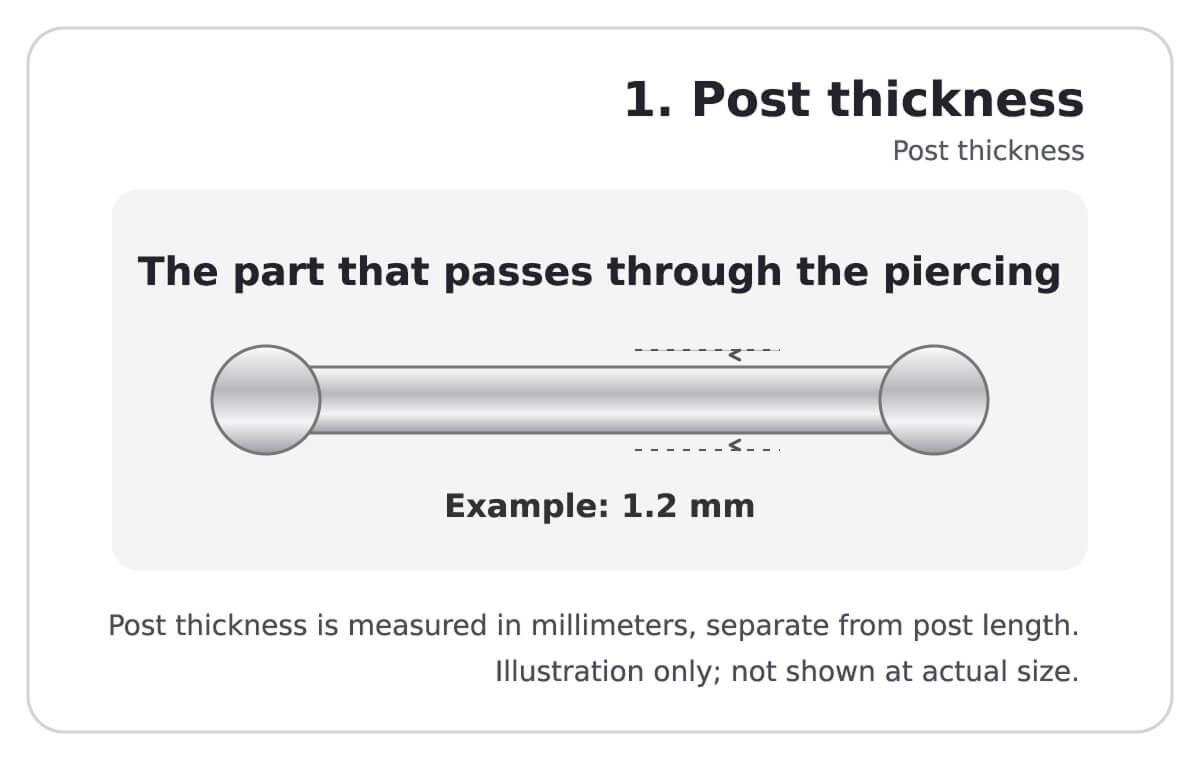
Thickness is the diameter of the part that passes through the piercing. Millimeters and gauge are two ways to describe it; a lower gauge number generally means a thicker post.

Common approximate equivalents are 20G = 0.8 mm, 18G = 1.0 mm, 16G = 1.2 mm, and 14G = 1.6 mm. These are conversions, not recommendations for a placement. Use the product’s stated dimensions and your established fit.

01
Wearable Post Length

Wearable Post Length

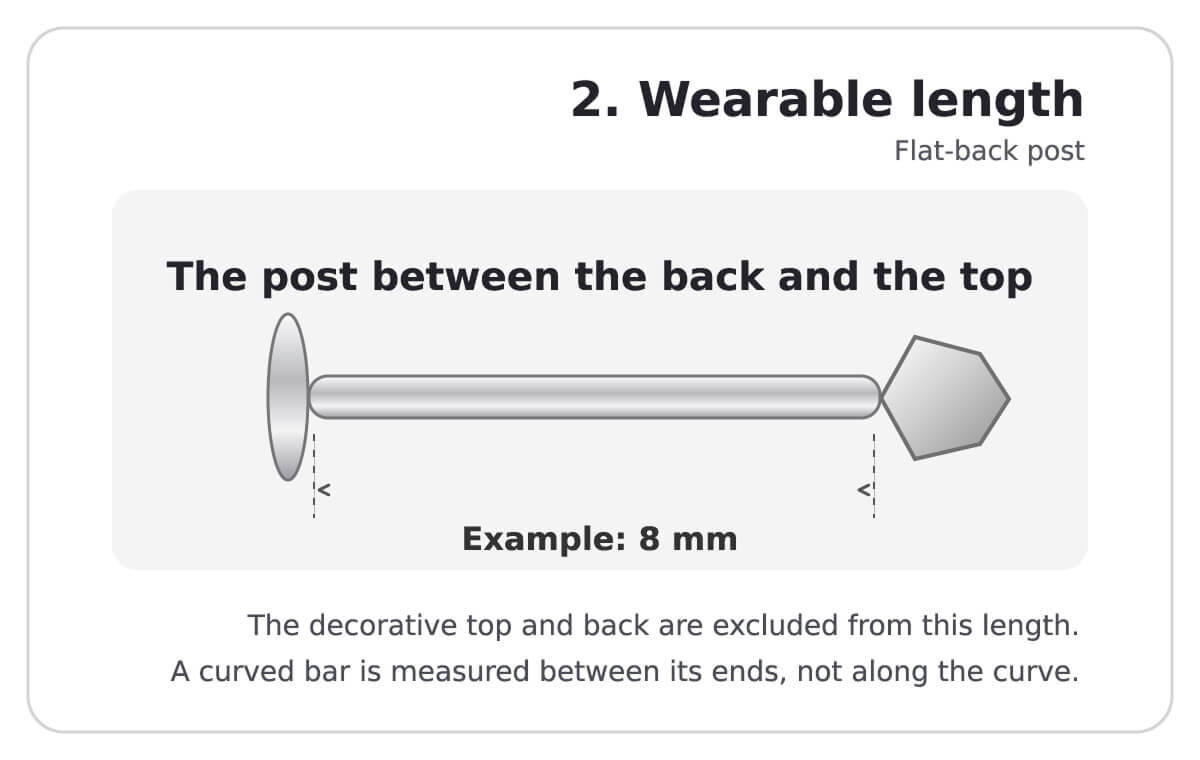
For a straight post, measure the wearable part between the inside faces of the ends or between the underside of the decorative front and the backing, as the design allows. Do not include the decorative top, ball, backing or threaded portion that sits inside an end.

A stated 8 mm length describes the post’s wearable section, not the full end-to-end height of the jewelry. It is not a universal fit for all ears or placements.

02
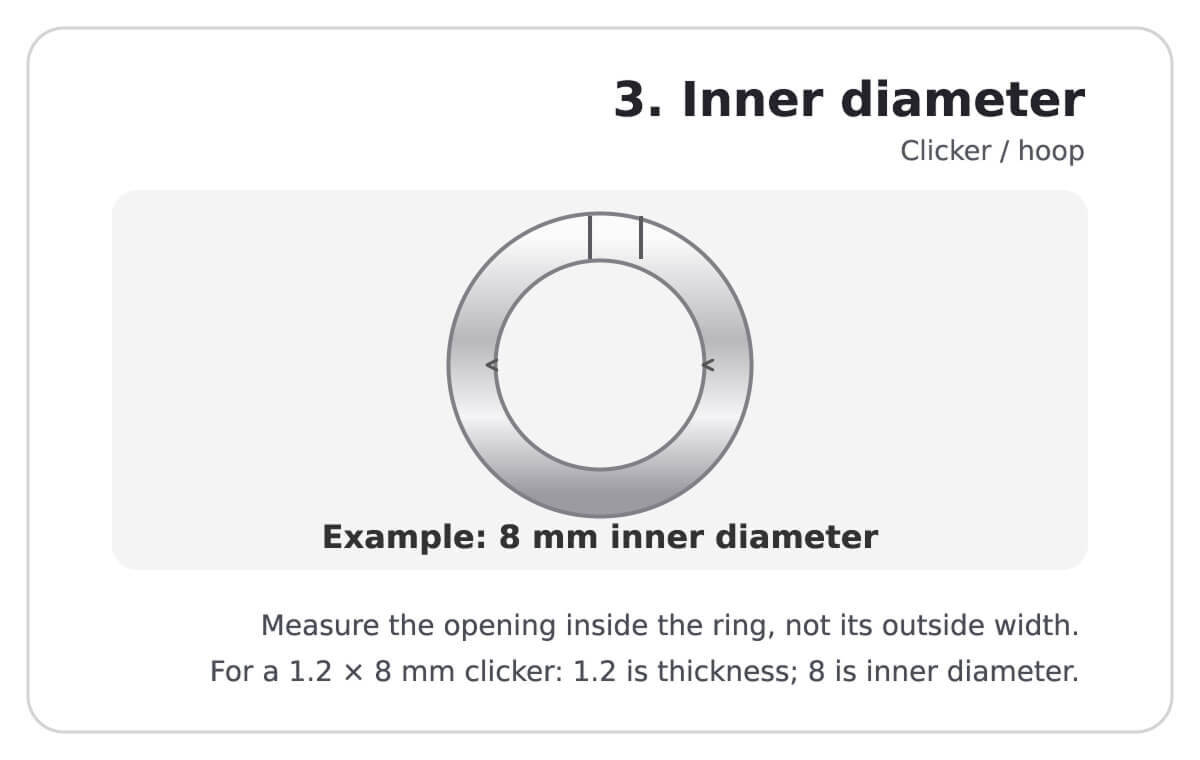
Ring Inner Diameter

Ring Inner Diameter

Measure straight across the inside of the ring, through its center. Do not include the metal thickness. Inner diameter differs from outer diameter, especially on thicker rings.

For horseshoes and other open circular styles, compare the product’s stated inner diameter, thickness and end sizes. Do not treat the gap between the ends as the diameter.

03
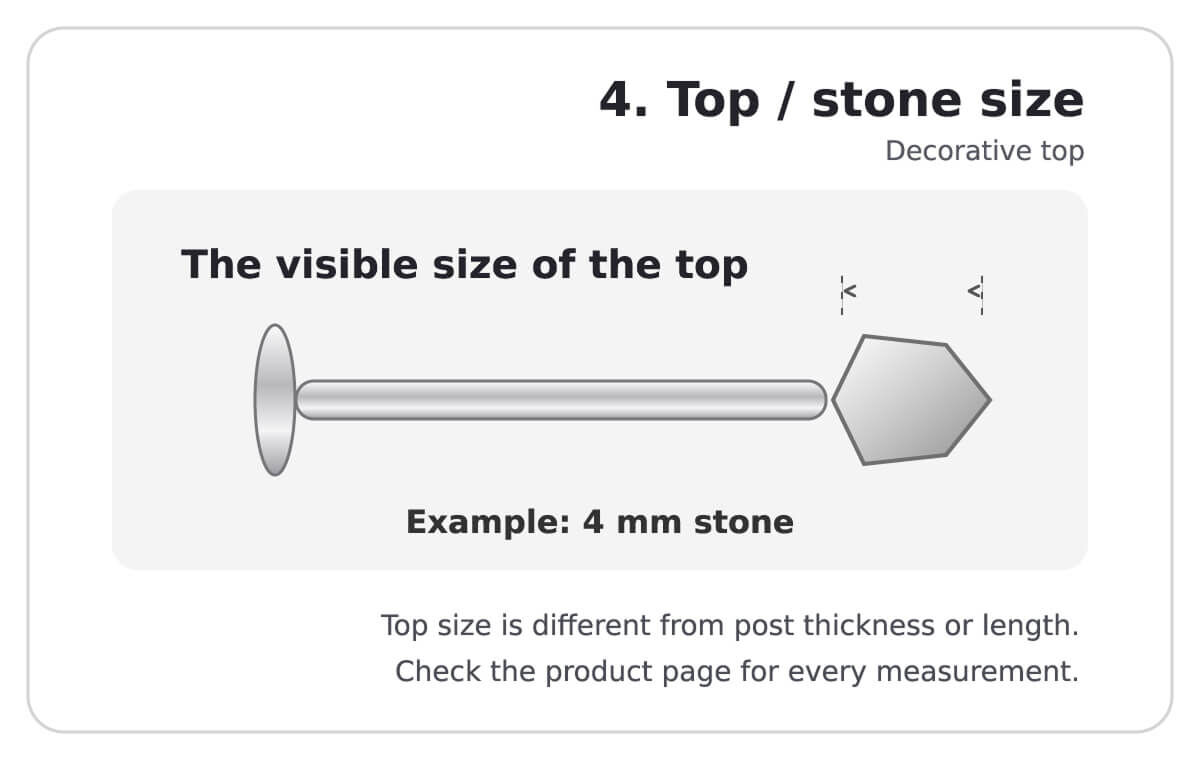
Decorative Top and Ball Size

Decorative Top and Ball Size

A top’s width and height are separate from the post thickness and length. For a round ball or stone, the stated size usually refers to its diameter; for shaped ends, check both width and height where listed.

A 4 mm top on a 1.2 mm post has two different measurements. A larger top does not necessarily mean a thicker or longer post.

04
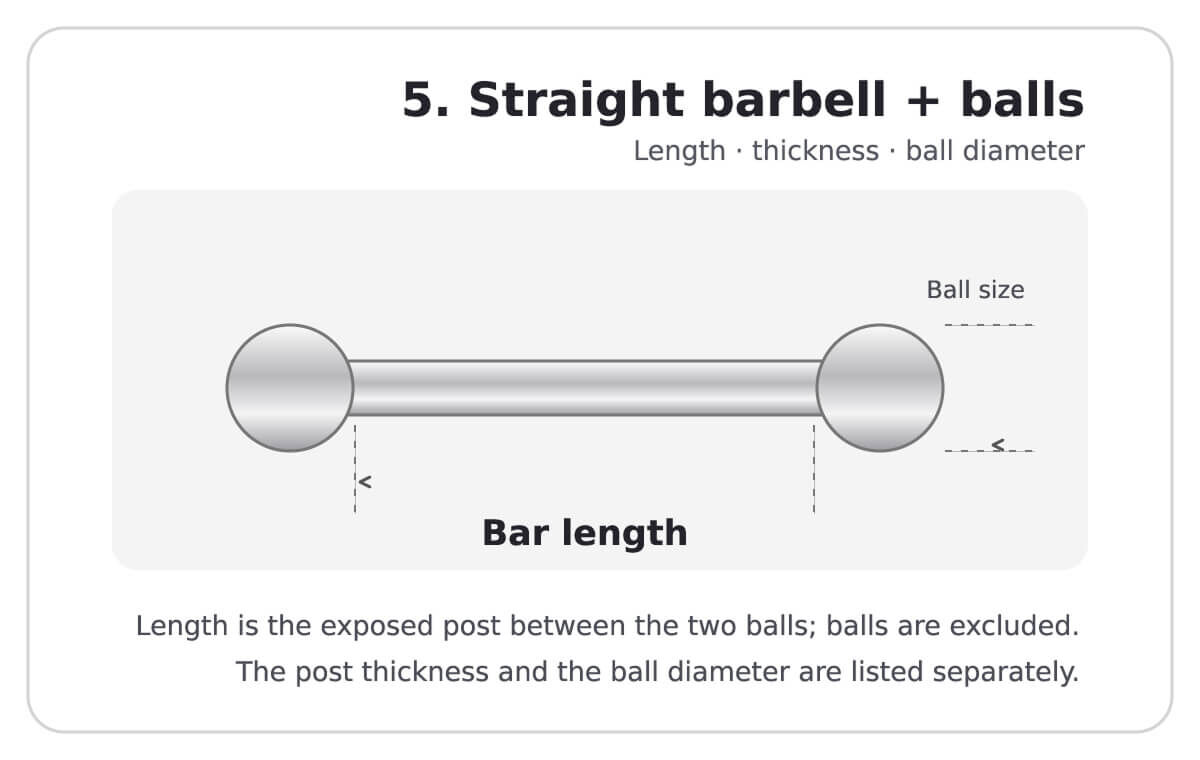
Straight Barbells

Straight Barbells

Check post thickness, wearable length between the inner faces of the ends, and each ball or decorative end’s size. Do not include both balls in the wearable length.

Industrial, tongue and nipple jewelry must fit the actual placement and anatomy. The bar length and design cannot be selected from the placement name alone.

05
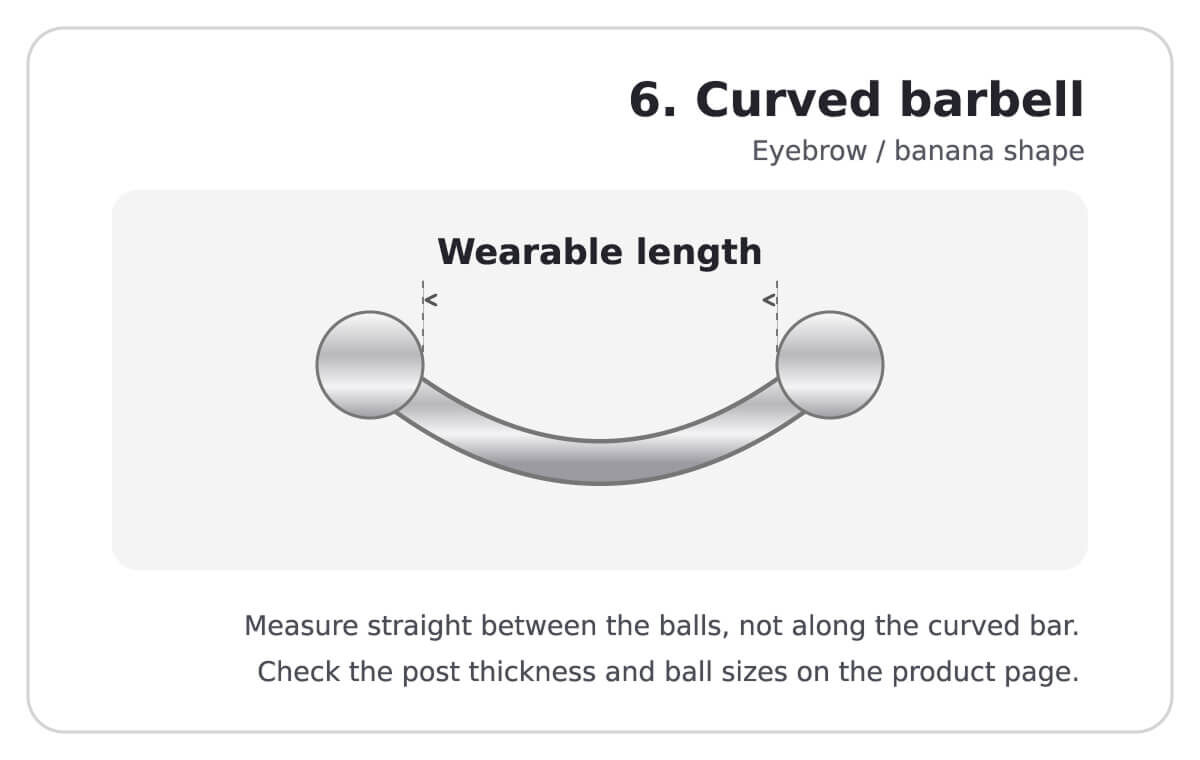
Curved Barbells: Eyebrow and Rook

Curved Barbells: Eyebrow and Rook

Check thickness and the length specified by the listing. Curved-bar measurements can be shown differently by suppliers. Compare the product diagram; do not measure along the outside arc and assume it matches a straight-line listing measurement.

If the diagram uses the straight distance between the inner end positions, use that same reference. Ask us before ordering if the measurement method is unclear. Include the sizes of both ends when considering how the piece will sit.

06
Curved Barbells: Navel

Curved Barbells: Navel

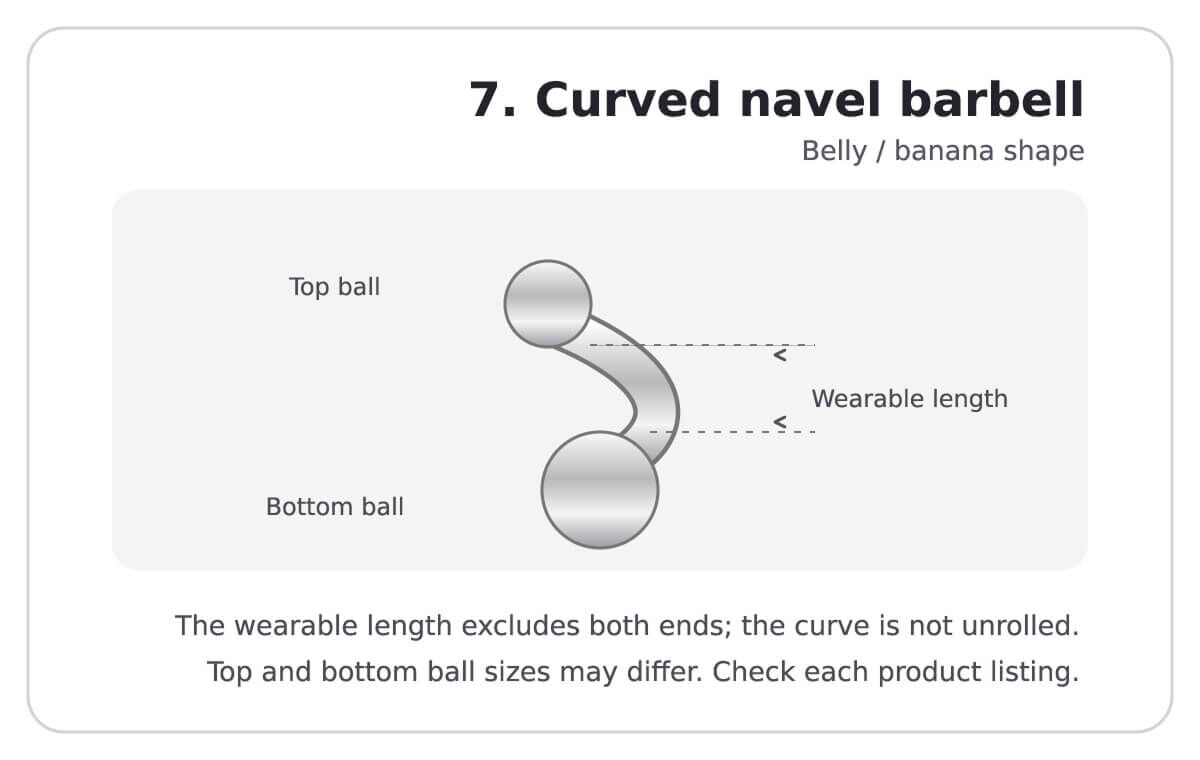
For a navel or banana-style piece, check post thickness, the listed wearable bar measurement and the upper and lower end sizes. A hanging charm’s total drop is an additional measurement, not the wearable bar length.

Traditional and floating navel styles are selected after anatomy assessment. A flat lower end or a certain bar length does not make a piece suitable for every navel.

07
Surface Bars

Surface Bars

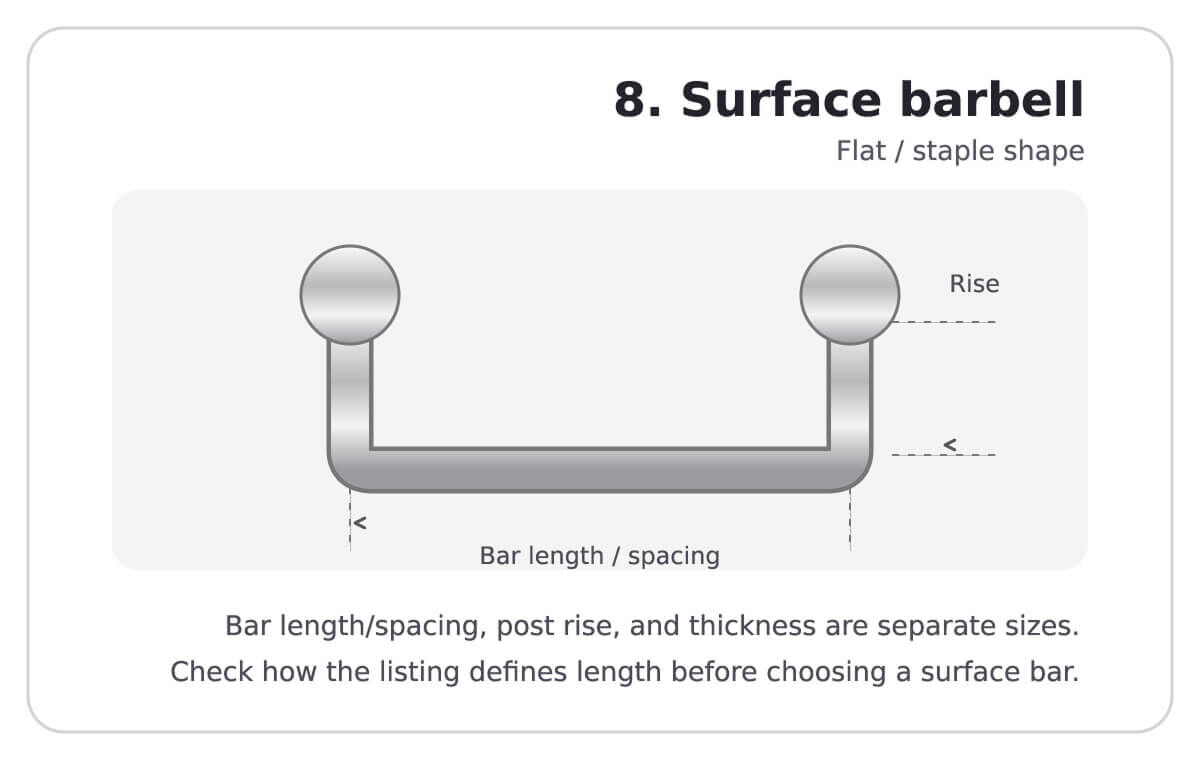
Check the wearable span across the surface bar, post thickness, rise or leg height, and the top sizes according to the product diagram. The total span including decorative ends is different from the wearable span.

Surface bars have a specific construction and fitting method. A curved barbell is not an interchangeable substitute. Have a qualified piercer confirm the design and fit; do not change a healing surface bar yourself.

08
Dermal Anchors and Tops

Dermal Anchors and Tops

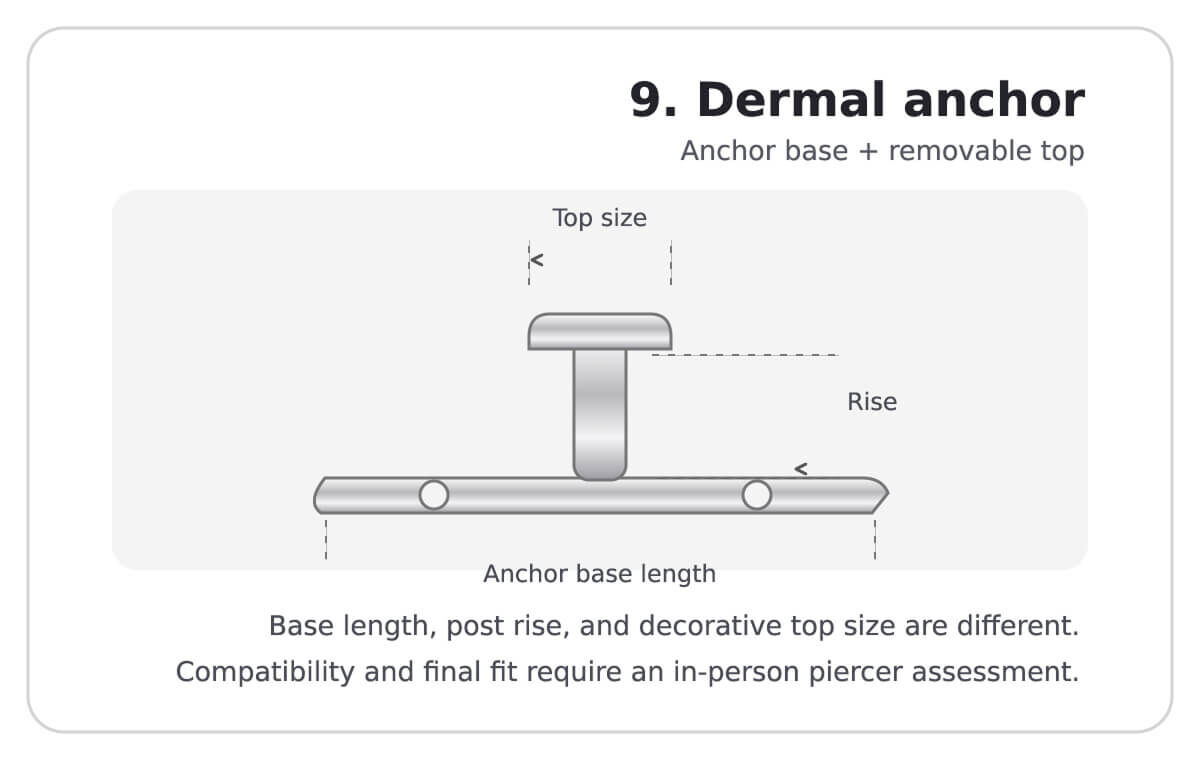
The anchor sits under the skin and is separate from the visible top. Check the top’s width or diameter, profile, thread specification and compatibility with the installed anchor.

A matching-looking top does not establish thread compatibility. Anchor post height and base design are assessed by a professional. Do not remove an anchor or fit an incompatible top yourself.

09
 

Not Sure About Your Size?

Send us the product link, your placement and your current jewelry measurements if you know them. We can explain the listed dimensions. Final fit may need an in-person check.

Personalized Sizing Support

Need Assistance Finding Your Perfect Fit?

Our sizing specialists are here to guide you. Send us your placement details or product link, and we will help you choose the precise measurement before you place your order.

Contact Us on WhatsApp

© Piercing Egypt. All rights reserved.